There is no doubt as human beings we get blocked and thwarted. The idea of being blocked, obstructed in our way forward is something I often hear. Usually, the obstacle is blamed on someone or something other than ourselves.
How often is the block simply a perception, in the realm of ‘ If only this thing or that person wasn’t in the way, I could achieve what I want!
I have an idea about how to shift that perception.
If we look at nature, at physics, at science, there is always friction. In fact we need it otherwise we would have no traction and simply slip around all over the place.
I believe the solution to feeling blocked and obstructed is to work with the friction. Our greatest invention, the wheel, does just this. It ‘shifts the friction’ so we can move forward. The wheel doesn’t eliminate it, it doesn’t counter it, it uses the friction and works with resistance to its advantage.
The wheel is perhaps mankind’s most simple, most elegant and most significant invention. What a great model for us to use when looking at solving problems.
I use the model of a wheel, it’s hub, it’s spokes and it’s rim as model for communication. Spoke is all about connection, working with the frictions of communication, of sadness, happiness, clarity and confusion to offer stories to connect and to progress.
Uncategorized
Change Your Mind
Change Your Mind
I love reflecting on everyday turns of phrase. How often do we hear the line, he/she changed his/her mind.
How often have you said: “I’ve changed my mind.” It is a powerful statement. I hadn’t released until now how powerful this statement is, and yet I throw this sentence into conversation with out a second thought.
It is very clear. Someone when they have changed their mind has decided or chosen to change.
And change is a big deal, its a big fear.
To say you have ‘changed your mind’ is a big shift.
Changing your mind can set off strong reactions in others. They may well have to change to, to be with where you have changed to.
I read some advice today that said: Seek not to change the world, but to change your mind about the world.
That simple sentence had me reflecting and thoughtful for an hour this morning, just after dawn.
The other thing I love about the words, ‘change your mind’ is that to me they symbolise a breakthrough in trust of one’s self, the whole of one’s self, from the rational to the intuitive processes that simmer and gel in us, and to reach the point of changing our mind is to have trusted all that we are.
So many of us say and act like we are totally logical rational beings, but the give away is when we say things like ‘changing our mind’. Where is the science in that? Well maybe it is simply that there is far more going on in our conscious and unconscious ‘minds’ that we own. And maybe the really good science of the 21st century will increasingly take account of ‘what lies beneath’ in our unconscious thoughts, actions and deeds.
Now there is a flipside to everything. And I know there will be those that will react to a ‘change of mind’ as indecision, unreliable, someone being ‘all over the place’. But I wonder it these reactions are often born of fear of change.
A change of mind comes from reflection, reassessment and correction that will ultimately lead to a more well informed, considered and mindful action.
In Awe of the Lore
A lot of thinkers and leaders like to talk about the ‘flipside’. Peter Sheehan, an Australian, has written a great book called Flip. To flip a problem, an idea, a thought, a story, is a very simple technique to shift a perspective, to see something anew. That can be exciting, groundbreaking, even revolutionary.
A word that’s come to prominence in English around the world is ‘awesome’. It’s used in slang, in motivational speaking, in acknowledgement, and in excitement. If something is awesome it is huge, bigger than big, greater than great.
I was walking the dog along Long Bay in Auckland the other day, and as often happens, I got to thinking and reflecting. I thought doesn’t everybody want to be awesome? To have an awesome life. To be able to say in a heartfelt way, without it being gloss, or a superlative, that life was simply awesome.
And then it clicked. It flipped. I realised that there was a simple, but possibly deceptive key to being awesome and having an awesome life. One simply needs to be ‘in awe’ and that was the point of the word awesome in the first place.
Being in awe is like being a new born child, where the world and every living moment is full of wonder, full of awe. It is somehow acknowledging the world and life itself is something truely magical, that it is infinite with possibility, with beauty, with uniqueness. Being in awe is about being in balance, recognising that we as individuals are one miniscule part of a very much greater whole that is absolutely awesome.
When I stop to think about it, being in awe is the same as being in love. It is being moved by something. There is a sort of humility to it, but not a belittlement. It is about balance, and not an over indulgence in the ego, and at the same time not an indifference.
After flipping awesome and being in awe, I started to think about the law and the lore. Its another place where we need to set a balance. I wrote this story as lore, my ideas thrown together from experience. To write by law, would be to follow a more strict code and formula. Nothing wrong with that, but the two should be in balance; law and lore. It seems to me the modern world is a lot about law, and about intellect, and that has given us some truely magnificent things in the past 150 odd years. We have used law to engineer some incredible man made things. But somewhere the lore about the way we live has become diminished.
Let’s be in awe of lore and law.
No Separation
When we separate things, they change dramatically. An egg white separated from a yolk, and whipped is so completely different from an egg white and yolk intact that you would never associate the two.
As human beings we have become expert at separating things. We separate ourselves from others, break connections. We separate our heartfelt feelings from our intellect. We separate ourselves from the land and sea.
In the western world, we have sensed for a long time that these separations are not healthy, and yet we remain addicted to them. These sepaations are responsible for our ill health, mentally and physically.
There are still models alive today from indigenous peoples such as Maori in Aotearoa/New Zealand that look at people and the world without separation. Sadly, many Maori have fallen ill due to adapting the separations of the modern world. But at the heart of their culture, and reviving slowly but surely is the concept that human kind and this planet are not separate at all, and are intrinsically linked as one whole living breathing entity. We know science can now prove this too.
The first people of America shared a similar belief system.
I love to think of the Maori word, whenua. And to call this broad and deep concept simply a word, does not seem to do it justice. Whenua is the name for the placenta, that feeds an unborn child. It is also the name for land, which feeds us all as infants, children and adults.
There was no separation between whenua the placenta, and whenua the land.
We have many beautiful concepts such as this at our fingertips, we just have to breathe, live and believe them, connected.
The Love of New
I never get tired of pausing to think about the potential deeper meaning and origins of words we use every day. I think the more we do this, the more reflective we can be, the more powerful we can be and the more effective we can be in communication.
I find myself disagreeing with people who assert that great communication is all about body language, who we are being etc and only in small part about the words we use and what we say.
Sure, talk is cheap and words can be mis used. But to me that is all the more reason to think and reflect on the words we use, their origins, words ability to be a concept as much as a description.
The last week or so I have been thinking a lot about the word ‘new.’ It is such a common word, but can stand for so much. And we give it meaning, a lot of meaning.
When it comes to material objects or possessions, we attach a very high value. When it comes to an idea, a thought, a piece of knowledge, or entertainment, we again give something ‘new’ a very high value.
So to the person who brings us something new, whether it is a material object or some information.
Working for many years as a journalist, ‘new’ stories became an addiction. Every story I wrote had to be new, have a new angle, reveal something that people didn’t already know. The media places a very high value on something new.In fact the word ‘news’ comes from ‘new’.
Without knowing the scientific or psychological background, I think that our attitude to ‘new’ runs deep. It is at a deeper level about renewal, about beginnings, about being alive. So we love something new because it tells us life is moving on, that we are living beings, that every morning we wake up there is something about the day that has us moving forward.
The flipside is being bored and seeing the world as ‘same old, same old’ and there are many of us who see the world this way.
Getting to grips with ‘new’ is a powerful place to be, in life, in our professions and in our relationships. Sharing new information and ideas can be a great act of generosity and very powerful in marketing yourself, your wisdom, and expertise. And it costs you nothing.
Glass Overflowing
It’s ANZAC Day in New Zealand and we remember all those soldiers who gave their lives in war.
It is a time filled with powerful stories; of courage, bravery, service, generousity, horror.
It’s had me reflect again on the power of story.
What had young men sign up and go off on the ‘adventure’ of war on the other side of the world?
It was a great story, not necessarily based on any sort of reality, but based on the mythology of the excitment of war, of travel, of mateship, of battle and being a warrior.
Nothing wrong with that as a motivation, in fact it is age old. But as we now know the real story was vastly different. Life was expendible, the enemy often unclear, and what and who we were fighting for vague.
Now, we are becoming immersed in the stories of recession, depression, economic turmoil, environmental collapse. This is today’s world war.
So what is the real story? I find myself flip-flopping daily, depending on whether I am exposed to news of disaster or hope. Most often I find myself flicking off the news more frequently than ever before as I hit overload at the compounding stories of doom. It seems almost to become a sick addiction, like moths dizzily attracted to a light.
And I arrive at the cliche: Is the glass half full or half empty?
I’ve always like to joke that my glass is always overflowing. And actually it is not really a joke. I can choose in any given moment to view my life as abundant, it really is all about perspective.
The key is how we frame the story we create about our world, our lives, is very much a choice.
I believe the only thing that will lift the world out of recession and depression is to get straight about why we love to hear a sad story, why we are so attracted and titilated by a sad story, doom and gloom.
It’s not about being a Pollyanna, forever wearing rose tinted glasses, but we can choose at any give moment the colour of the lens, the shape of the frame, because no given moment is ever exactly the same. We don’t have to constantly drag the past with us.
The glass is always overflowing simply because I choose to see it that way.
The Spokes of Spoke
Spoke can mean two things; to have communicated, verbally, or in another demonstrable way, or the spoke of a wheel.
People ask me which of the two meanings is behind my brand, Spoke. Well, both.
The connection between the two meanings is to ‘radiate.’
So it is my intention that all communication radiates. It can radiate via the spoken word, or other media for communication, across the human senses; visual, tactile etc.
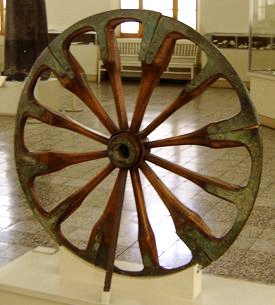
The spokes of a wheel radiate, and give strength and support from the hub to the rim, to the whole, to the circle.
Communication is about connection, and great communicate radiates far beyond what we often imagine.
It is my commitment to encourage people to communicate in a way that radiates, that make a difference far beyond what they might expect.
Without delving into metaphysics, communicating is a form of energy, most obviously perhaps in broadcasting where it travels across airwaves as energy.
We should never underestimate the power of our spoken word, of our human communication; to connect, make a difference, spread hope inspiration and love.
Road Rage
I drove into Auckland against the tide of Easter traffic yesterday. It was at a standstill, people getting out of their cars and walking around. The brand new road and expensive tunnels just north of the city let the traffic now flow about a further two or three kilometres, then it jams up, the same as before. Wow, $40 million plus spent just to shift the queues up the road a little.
I’m sorry if this sounds cynical, but it does seem a collosal waste of time and money. Now they are talking more seriously of extending the motorway further north to Wellsford, another 10-20 kiolometres .
It seems so simple but we overlook the basic fundamental problem, the number of cars on the road.
I guess we are challenged with a rugged terrain and sprawling population, but surely we could find other ways to go up north, by train, by boat, by shared transport.
I am no different from anyone else and love to do my own thing, have the freedom to jump in the car and head out of the city. But sometime soon we all have to shift the way we do this.
Spending more and more on roads, buying more and more cars, just does not make sense.
I notice too my moods in the car, my judgement of others on the road and how they drive is huge. I am at my nastiest, my darkest thoughts about others are in the car.
Road rage is such an un necessary state, and yet it consumes us, and this week in the city an innocent and lovely old man died the victim of road rage.
It is not able and it is not sussed to be in such a state that the value of a car, an ego upset, rises above the value of a human life.
Love the Cream
I love it when ideas collide. When I am thinking, talking about something, and suddenly I think of a connection to something else that at first view is totally unrelated.
So it is with cream. Cream is to most minds always of great value. The ‘cream of the crop’,’creaming it’ the ‘creme de la creme’. It is always a word used in association with success and with quality; with the best.
But in diet, cream has ended up with a bad rap. Most in the western world would tell you that cream is bad for you. Sure, in small amounts it’s fine, but to consume it in any quantity is going to be really bad for you. So is this true? My grandmother lived to 104 and loved cream and butter. So I’ve often wondered about how bad it can be.
A friend of mind who is a professional nutritional maverick told me a great story about cream. A researcher in the early 20th century studied a people living in a remote Swizz valley who had exceptional health, and an unrefined diet. On village sports day, athletes would be given a large bowl of pure cream; their version of a sports drink.
So what’s my point?
Homogenised milk still has cream, it’s just busted into tiny globs throughout the milk.
And so too I believe we homogenise our lives, taking an intellectual approach to how we live.
We don’t take risks, and we don’t trust our instincts about what we know, what we do and what we believe. We bust the cream, that which is great, into globules that become indistinct; but in their busted down form, fester unrealised.
I tell clients who come to me to mentor and advise them on excellent communication that what rises to the surface, what you recall from a conversation, a speech, a book, a documentary, a movie days later was the essence of the story and what you neeeded to learn. And if the originator was skilled, what you recall is what they intended.
Let the cream rise to the surface. Trust it, enjoy it.
The Soul of the Vowel
The ability of human beings to speak is a an enormous gift, and one that we often seem to take forgranted.
Compared to any other living being on the planet, the sophistocation of our physical ability to manipulate sound and use language is magnificient.
I sometimes hear people debate that words and language are not the most important part of ur communication.ud They say body language, and who we are being are more important than the words.
I think they underestimate the power of the word. In spirituality, from Christianity to Buddhism, Hinduism and Islam, the word is seen as a vibration that started the world.
Word and world are similar words.
My point is that speaking is energy, vocalising is an energy, and it is a powerful energy to communicate. It is sacred, and we should pause often to put heart into how we speak and treasure the gift of the spoken word.
I once spent some time learning tibetan throat singing and we would do an exercise to chant the vowel sounds, a, e, i, o, u. As we ran the sounds together a harmonic would start to appeear between the letters, like a vocal rainbow. It was magic.. We were focusing on the vibration of the spoken word. In between the letters, we were expressing soul. It is like the difference between thinking and being; the space between, unconconscious. I find it interesting that all our consonants block sound, the ps, the bs, gs and other sounds. So that blocking gives us sophistocation in language, but an interuption too, an intellectual interuption.
I’d like to think we can use the vowels to meditate, and in meditation, treat our human languages as sacred, as energy with power to communicate, to connect, and to love.